Preclinical studies
Vish Muthusamy, PhD
About the services
Jump to Drug formulation — Toxicology — Pharmacokinetics (PK) — Pharmacodynamics (PD) — Non-cancer PD/efficacy studies
Drug formulation

With deep experience in first-in-vivo compounds, we support the optimization of formulation and dosing strategies for discovery-stage drugs that have never been tested in animal models. When appropriate, pharmacokinetic-driven bioavailability studies are integrated to define optimal dosing regimens and routes of administration. [Back to top]
Toxicology
We perform comprehensive in vivo toxicological profiling to assess the safety of candidate drug compounds. The following evaluations are routinely conducted:
- Maximum tolerated dose (MTD)
- Hematology (CBC with differential)
- Clinical blood chemistry
- Liver enzyme analysis
- Histopathological evaluation
In vitro toxicity testing and custom assays can be performed, depending on availability of required equipment and expertise. [Back to top]


Pharmacokinetics (PK)
We conduct standard serum and plasma pharmacokinetic (PK) analyses to evaluate bioavailability, peak concentration Cmax, and half-life (T1/2). PK data are used to inform optimal dose selection, dosing frequency, and routes of administration for in vivo efficacy studies.

Quantification methods routinely employed include:


- LC–MS/MS (small molecules, peptides)
- HPLC (small molecules, nanoparticles)
- ELISA (proteins)
- Quantitative PCR (nucleic acids)
Advanced PK studies—including efficacy-linked PK and tissue distribution analyses—are available through customized experimental designs. [Back to top]
Pharmacodynamics (PD)
We conduct in vivo pharmacodynamic and efficacy studies across a wide range of cancer models to support preclinical drug evaluation. Studies can be performed using single-agent monotherapy or in combination with standard-of-care (SoC) therapies.
Our extensive experience enables informed recommendations on model selection, dosing regimens, combination strategies, and appropriate SoC comparators, minimizing the need for extensive optimization and saving significant time and cost.
Study endpoints may include:
- Tumor growth inhibition (TGI)
- Survival
- Disease recurrence
- Additional efficacy and response biomarkers, as appropriate [Back to top]


Non-cancer PD / efficacy studies
Our expertise extends beyond oncology. We support model development and in vivo efficacy studies in additional disease areas, including autoimmune and infectious diseases.
Please contact us to discuss feasibility and study design for pharmacological efficacy evaluations in your model of interest. [Back to top]


Available to Yale researchers only
-
Services
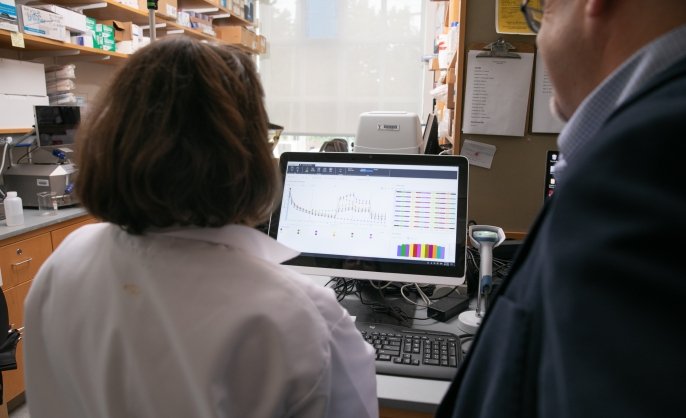
Cellular and mitochondrial respiration and bioenergetics
Cellular and mitochondrial respiration (OCR) and acidification (ECAR) are assessed with the Agilent Seahorse XF Pro 96. In a 96-well plate format, real-time measurements of cellular respiration, oxidative phosphorylation, mitochondrial leak, and mitochondrial transport are assessed as functional kinetic measurements of cellular bioenergetics. Changes in acidification are also observed simultaneously. An integrated Agilent BioTek Cytation5 imager correlates cell number via Hoechst nuclear stain to respiration for more accurate normalization of respiration.
Located within Chemical Metabolism CoreRebecca Cardone, MS
-
Instrument/equipment
BD LSR Fortessa X20
The Fortessa analyzer has 4 lasers, including V 405 nm, B 488 nm, YG 561 nm, and R 640 nm. It can detect 16 colors.
Located within Science Hill Flow Cytometry FacilityFreya Wencker, PhD
-
Instrument/equipment

BD Symphony A1 analyzer
Analyze from single tubes or 96-well plates with 45 lasers (violet, blue, yellow/green, red) and 64 detectors (6 violet, 2 blue, 4 yellow/green, 3 red).
Located within West Campus Flow Cytometry Facility